
Harmful Algae Bloom Monitoring For Everyone!
The magic of the smartphone makes bloom reporting easy.

A potentially harmful cyanobacteria bloom. Image source: cyanos.org
Occasionally, the conditions in a lake or stream are just right for phytoplankton (algae and/or cyanobacteria) to visibly dominate the ecosystem. When this happens, you’ll notice the water is distinctively green (but occasionally brown or even red or purple) or the surface is covered in muck. We call this condition an “algae bloom” or simply a “bloom.”
In some cases, the species causing the bloom can create toxins that are harmful to animals, including humans. These are called Harmful Algae Blooms, or HABs (sometimes cyanoHABs).
Though they can be unsightly and detrimental to lake health, not all blooms are harmful to humans. In freshwater, only the cyanobacteria (bluegreen algae) produce toxins. Unfortunately, it is nearly impossible to distinguish the difference by simply looking at the water. Fortunately, there are a few ways to help determine if you have a potentially harmful cyanobacteria bloom.
You can summon experts using your smartphone!
bloomWatch
bloomWatch is an app developed by the U.S. Environmental Protection Agency (EPA) to help people report suspected HAB events. It’s easy to use and allows users to submit photos and location data. While it works best on a smartphone, information can also be submitted via the web.
Download the app from the App Store, Google Play, or use the web version. Reported blooms can be viewed on their dashboard.
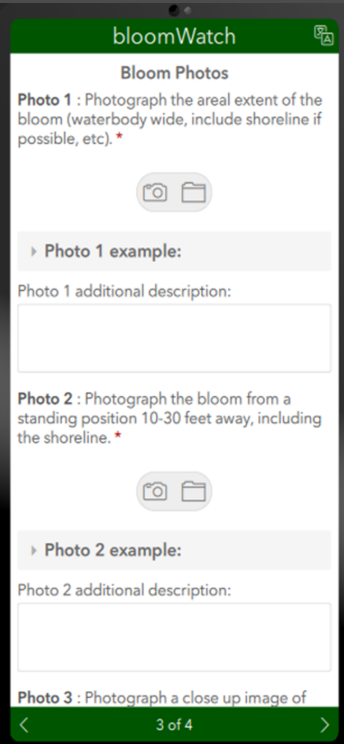
The bloomWatch app
Using the app to submit a report is easy!
Aside from providing a venue to report suspected HABs, the EPA also has a model for Missouri’s larger lakes that predicts the probability of a HAB appearing. Currently topping the list in early August 2026 are Wappapello (79.2%), Smithville (52.4%), and Longbranch (49.1%).
The MU Aquatic Ecology Lab (our home at the University of Missouri) has a small grant examining the effectiveness of this model on Missouri's lakes. Another aspect of our grant is following up on bloomWatch reports. By harnessing the amazing energy of our many volunteers, we hope to collect samples to improve the model in the future.
Missouri DNR HAB Reporting
The Missouri Department of Natural Resources (MoDNR) has its own HAB Reporting Form. They also have a map of reported HABs.
Whether you use Bloomwatch or the MoDNR website, your report will get to MoDNR and someone will respond if requested via the form. After examining submitted photos and other information, MoDNR or MDC (Missouri Department of Conservation) staff may visit publicly accessible lakes to confirm a HAB presence. If confirmed, authorities will be notified to post signs warning lake users of the potential danger. In the case of drinking water lakes, MoDNR will visit and consult with the water plant operator about next steps.
While waiting for the experts to weigh in, there are a two quite simple tests you can complete. Both will provide valuable data if you are asked for follow up information that can prioritize a field agent visit or spare them an unnecessary trip.
The Stick Test
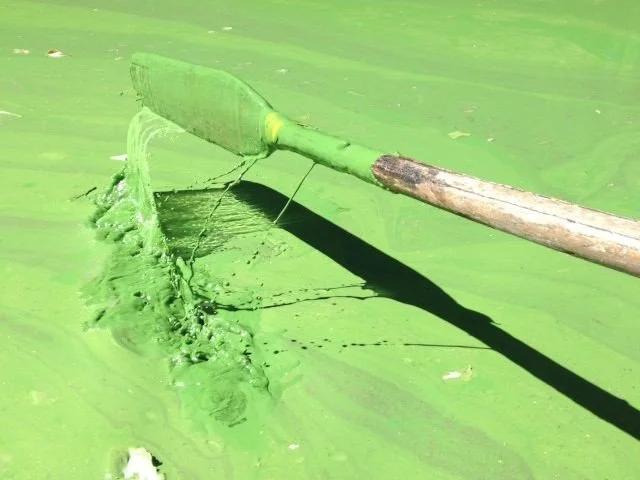
If you see a scum or a mat on the surface of the water, try to pick it up with a stick, boat paddle, rake or similar object. If the scum hangs off the stick like hair, it probably is NOT cyanobacteria. If the scum paints your stick, it likely IS cyanobacteria. If the stick comes out clean, move on to the next test.
The “Stick Test”
Because the scum paints the oar, this is likely cyanobacteria. Image source: Clemson Cooperative Extension
The Jar Test
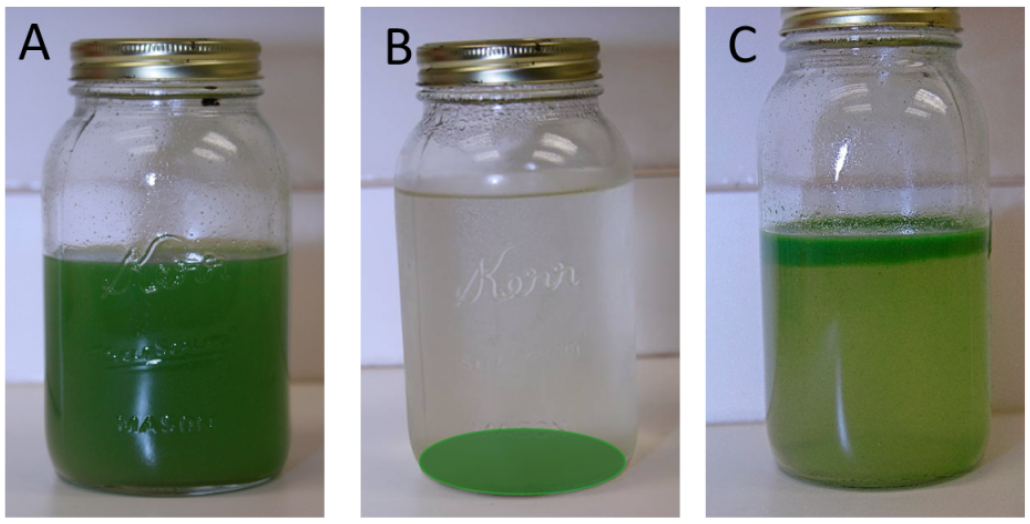
Fill a clear, preferably disposable, jar or bottle with lake water and cap it. You need to leave a little space at the top, so don’t fill up completely. Put the jar in the refrigerator and don’t disturb it. After a few hours, carefully examine the jar without disturbing it. If the scum is at the bottom, it’s probably NOT cyanobacteria. If the scum is floating at the top, it likely IS cyanobacteria.
The "Jar Test"
Well-mixed sample (A), settled material not likely to be cyanobacteria (B), and floating material likely to be cyanobacteria (C). Image source: Interstate Technology Regulatory Council
Sometimes visible blooms are our only indicator of potentially toxic water. They can come and go quickly, sometimes forming in minutes only to dissipate an hour or two later (video). Unfortunately, even though the bloom is gone, toxins may still be present. By reporting the bloom and collecting evidence via the jar and stick tests, you can initiate a response by state agency personnel to investigate and help keep people safe from exposure.
Volunteers for the Lakes of Missouri Volunteer Program collect water samples for cyanotoxin measurement. Our monitoring helps us determine if toxins are present in Missouri lakes, even in the absence of visible blooms. You can help us help lakes by making a tax-deductible donation today!